

Flyer, EN


Affinis Inverse provides a proven solution for reverse shoulder replacements, included in allergy cases. The unique vitamys-ceramic tribological pairing allows for a low wear rate 9 and durable prostheses.
Inlay screw notching was eliminated by metaglene optimization to a two-peg design without an inferior screw. An increased impingement-free range of motion is achieved by a systematic glenosphere overhang and chamfered inlays – with an effective humeral stem inclination of 147°. [1]
With an inversion of the materials in the tribological pairing, polyethylene abrasion at the scapular neck and the surrounding structures is eliminated.(2) This results in a reduced risk of polyethylene-induced diseases. [3-6]
Proven primary procedure with more than 15 years of clinical experience and strong clinical evidence. [7,8]
Affinis Inverse features an evolutionary design:
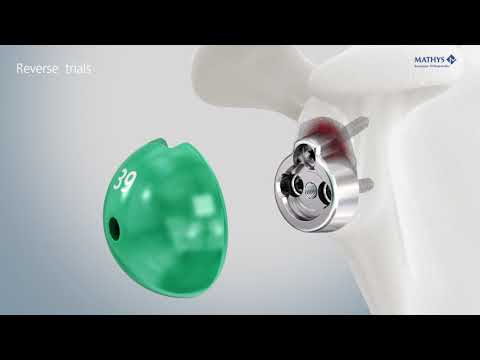
in the Metaglene DP (Double Peg), inlay screw notching was eliminated by metaglene optimisation to a two-peg design without an inferior screw. An increased impingement-free range of motion is achieved by a systematic glenosphere overhang. A snap-in mechanism ensures a stable connection between metaglene and glenosphere. For more options in the treatment of larger defects or deformities, or in revision cases, the Metaglene CP (Central Peg) is ideal. A slightly stronger central press-fit peg in four lengths allows good primary stability even in difficult cases. The Affinis Inverse prosthesis convinces also on the humeral side with its evolutionary design with monolithic press-fit stems.
The Affinis Inverse shoulder system is defined by an evolutionary implant design as well as by use of progressive materials. These are vitamys, a highly crosslinked polyethylene enriched with vitaminE, for the glenosphere. The benefits of vitamys are obvious: The good mechanical strength allows long-term mechanical performance of the material. The high wear resistance reduces wear and thus the
risk of osteolyses. [4-6] The addition of vitamin E furthermore ensures resistance to oxidation and thus high resistance to ageing as well. [10]
Affinis Inverse features high-quality ceramics for the inlay liners, with low wear rates, high strength and toughness, good wettability as well as biologically inert behaviour. [3, 10, 11] These advantages make the ceramics a treatment option not only for young and active patients.
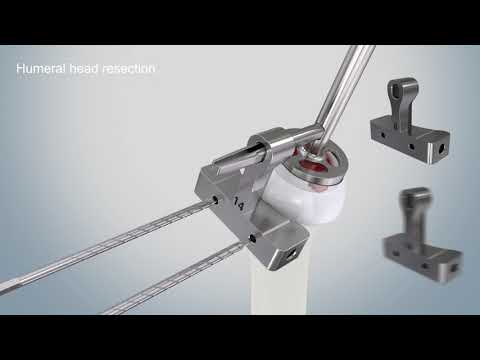
A straightforward set concept and a smart instrumentation simplify the workflow during implantation. Furthermore, all surgical steps are instrument guided, thereby reproducible results can be achieved.
eIFU-Mathys and further documents available here
Limacorporate S.p.A. / Mathys Ltd Bettlach, an Enovis Corporation affiliate, as a manufacturer of prosthetic implants, does not practice the medical profession. The choice of the most suitable surgical procedure and technique is the responsibility of the healthcare professional. Each Surgeon must evaluate the appropriateness of the implant technique they intend to perform in light of their own preparation, experience and clinical evaluation of each individual Patient.
This video is provided for the exclusive use of healthcare professionals. All rights to the content of the video are reserved pursuant to applicable law. Reproduction, publication and distribution by third parties are expressly prohibited without permission.


Affinis Inverse Glenoid with polyethylene glenosphere and two pegs metalback
View of glenohumeral joint with Affinis Inverse
Bone graft technique with Affinis Inverse
Affinis Inverse Instruments Trays
Flyer, EN

Surgical Technique, EN


Surgical Technique, EN
Product manufactured by Mathys Ltd Bettlach
Please note that not all products are available and registered in every market. Please contact your Enovis’ Sales Representative for any further information.
Mathys Ltd Bettlach and Limacorporate S.p.A. are affiliates of Enovis Corporation.
Get in touch with us by filling out the form below.